
 EN
EN
 English
 Français
 Español

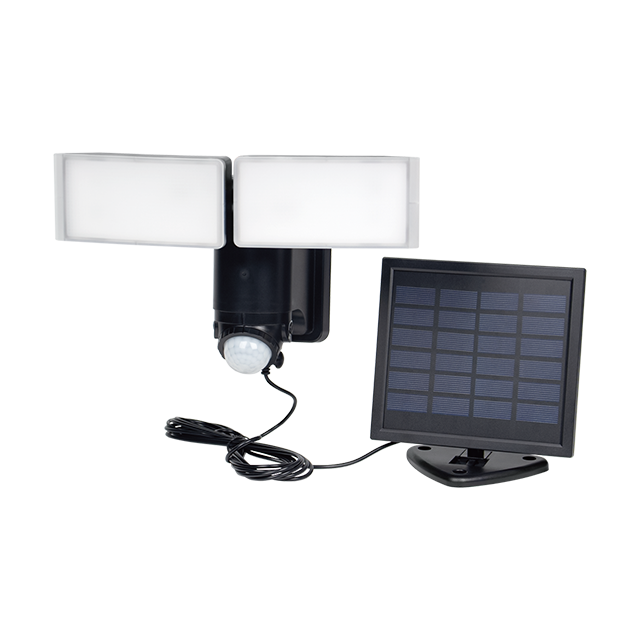
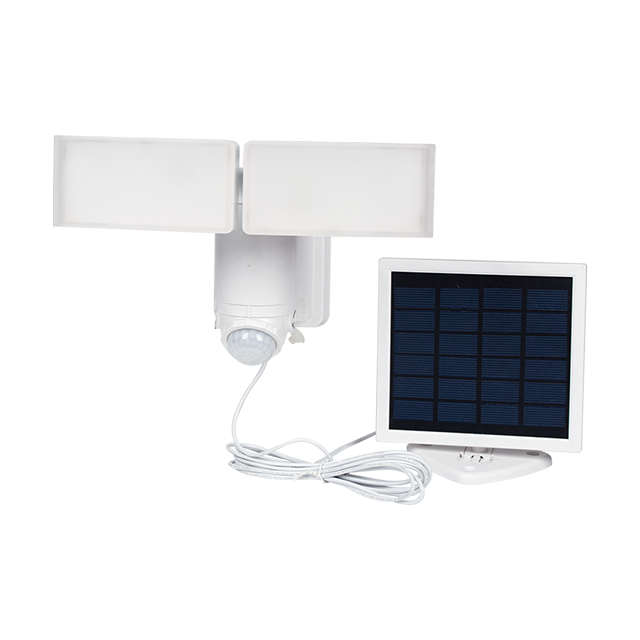
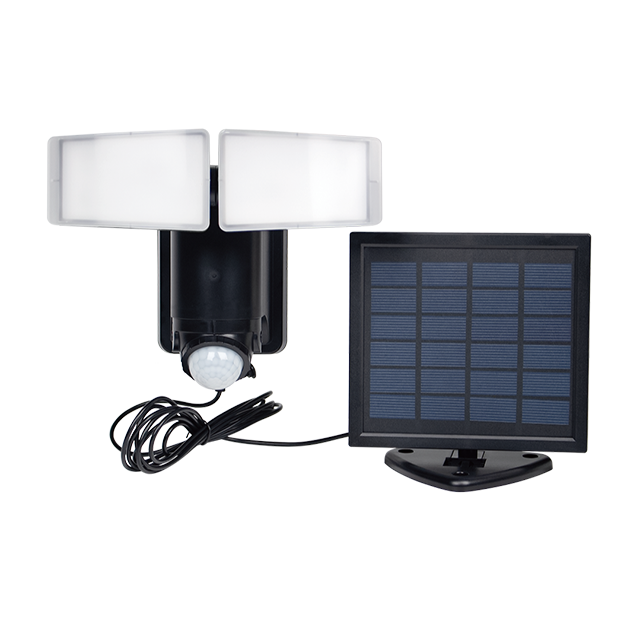
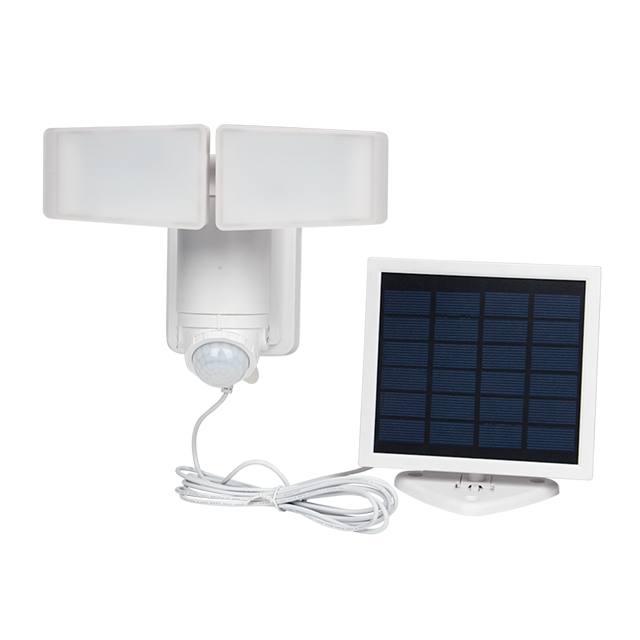
Solar Wall Light

While solar lighting is widely celebrated as a green and energy-saving solution, many users find that the performance of Solar Outdoor Wall Lights is not always consistent. This sophisticated system, composed of photovoltaic panels, energy storage batteries, LED light sources, and controllers, introduces a series of inherent flaws dictated by the laws of physics and environmental factors while breaking free from the shackles of wires.
To truly understand the limitations of Solar Outdoor Wall Lights, we must look beyond marketing claims and conduct a comprehensive examination of technical principles, environmental constraints, and long-term maintenance. The table below summarizes the fundamental differences in core performance between solar lights and traditional hardwired wall lights:
| Performance Dimension | Solar Outdoor Wall Lights | Traditional Hardwired Wall Lights |
|---|---|---|
| Energy Source | Off-grid Photovoltaic (Unstable) | AC Grid Power (Stable) |
| Average Brightness | 100 - 800 Lumens (Battery dependent) | 800 - 3000+ Lumens |
| Working Hours | Sunlight dependent, usually 4-10 hours | 24/7 on-demand availability |
| Installation Cost | Extremely Low (Zero wiring) | High (Requires professional electrician) |
| Env. Dependency | Extremely High (Needs direct sunlight) | None |
The core competitiveness of Solar Outdoor Wall Lights lies in their ability to generate power autonomously, but this is also their greatest weakness: extreme reliance on solar radiation.
Solar resources are unevenly distributed across the globe. For Solar Outdoor Wall Lights installed in high-latitude regions of the Northern Hemisphere, the sun's angle is lower, the light path through the atmosphere is longer, and energy scattering is severe. This means the same lamp might work all night in Florida but only last a few hours in London or Seattle.
Cloud cover is the enemy of solar panels. Even products claimed to "charge on cloudy days" see their current output drop to only 10% to 25% of a sunny day under thick clouds. Prolonged rainy seasons can lead Solar Outdoor Wall Lights into a deep discharge state, which not only prevents lighting but also severely damages the chemical activity of the battery.
In winter, it is not just a matter of "less sun." Changes in the solar angle mean that sunlight, which originally hit the wall vertically, becomes oblique, significantly reducing the number of photons received per unit area of the Solar Outdoor Wall Lights panel. Statistics show that in typical mid-latitude regions, the effective operating time of solar lights in winter is often 30% to 50% shorter than in summer.
Many consumers believe that Solar Outdoor Wall Lights will be fully charged as long as they are exposed to the sun, but the reality is limited by the physical conversion bottlenecks of current photovoltaic materials.
Most Solar Outdoor Wall Lights on the market use Monocrystalline or Polycrystalline panels. Even for leading monocrystalline technology, the actual conversion efficiency is only around 19% - 23%. This means nearly 80% of the solar energy hitting the surface of the wall light is lost as heat.
| Parameter | Monocrystalline Silicon | Polycrystalline Silicon |
|---|---|---|
| Typical Efficiency | 15% - 23% | 13% - 17% |
| Low-light Performance | Better | Poor |
| Heat Resistance | Strong (Slow power drop) | Average |
| Appearance | Pure Black (Uniform) | Blue (Speckled) |
Because Solar Outdoor Wall Lights are wall-mounted, they cannot be adjusted to a perfect tilt angle like rooftop solar arrays. Most wall light panels are fixed vertically or at a slight angle. If there are eaves, awnings, or greenery above the wall, even brief shadow coverage can cause a sharp drop in charging current due to the "barrel effect."
Energy must pass through a charge management chip as it travels from the panel to the battery. Every charge-discharge cycle generates resistance heat loss and chemical conversion loss. Typically, the comprehensive system efficiency loss of Solar Outdoor Wall Lights is about 20%. This means for every 1W of power generated by the panel, only about 0.8W may actually be utilized by the LED beads.
In practice, the most direct complaints from users regarding Solar Outdoor Wall Lights focus on "insufficient brightness" and "mid-night blackout." This is not accidental but is determined by limited energy density and mandatory energy-saving strategies.
Brightness is measured in Lumens. For Solar Outdoor Wall Lights, every lumen of output directly consumes the extremely limited power in the battery. To extend runtime, most products are forced to compromise on brightness.
| Light Type | Typical Lumen Range | Effect Description | Application |
|---|---|---|---|
| Standard Solar Wall Light | 100 - 300 | Soft glow, similar to a candle | Decoration, path marking |
| High-bright Motion Light | 400 - 800 | Instant bright light for 3-5m | Entrance security |
| Hardwired LED (10W) | 800 - 1200 | Bright and uniform coverage | Patio, garage door |
| Hardwired Floodlight | 2000 - 5000+ | Extremely bright like daylight | Large yards, pro security |
Unlike grid lighting which maintains constant brightness, Solar Outdoor Wall Lights are often accompanied by severe power decay.
Linear Decay: As battery voltage drops, many low-end circuit designs cause the light to dim gradually.
Segmented Strategy: To ensure the light stays on until dawn, high-end Solar Outdoor Wall Lights use smart dimming: e.g., 100% brightness for the first 2 hours, then dropping to 30%, returning to full brightness only when motion is detected. This extends runtime but sacrifices a consistent high-quality lighting experience.
The internal battery is the most fragile and expensive component of Solar Outdoor Wall Lights. Its lifespan directly determines the product's scrap cycle.
Most Solar Outdoor Wall Lights use Lithium Iron Phosphate (LiFePO4) or Ternary Lithium batteries. Although they support hundreds of cycles, batteries rarely reach their theoretical lifespan in outdoor environments.
Depth of Discharge (DoD): Since energy is depleted nightly, batteries are often in a "deep discharge" state, which accelerates electrode material shedding.
Cycle Life Prediction: Cheap Nickel-Metal Hydride (Ni-MH) batteries usually only support 300-500 cycles, meaning your Solar Outdoor Wall Lights may fail completely in 1-2 years due to battery expiration.
Batteries are extremely sensitive to temperature, and Solar Outdoor Wall Lights mounted on walls are exposed to the most drastic temperature fluctuations.
| Temperature | Impact on Battery | Result |
|---|---|---|
| High (>40°C) | Intensifies side reactions, increases resistance | Permanent capacity drop |
| Freezing (<0°C) | Reduces lithium ion activity | Charging fails or 50% capacity loss |
| Extreme Cold (<-20°C) | Electrolyte may freeze | Physical damage, irreparable |
As devices exposed to the elements 24/7, Solar Outdoor Wall Lights must constantly face UV rays, rain, and extreme temperature changes. Due to cost control, material choices are often a weak point.
Most economical Solar Outdoor Wall Lights use ABS or PC plastic. Ironically, these solar-powered devices are most afraid of ultraviolet (UV) rays.
Photo-oxidation: UV rays break down plastic molecular chains, causing yellowing within 12-18 months.
Physical Brittleness: Long-term thermal expansion and contraction cause micro-cracks, making the protective layer over the PV panel cloudy and blocking light.
| Material Type | UV Resistance | Strength | Expected Exterior Life |
|---|---|---|---|
| Cheap ABS Plastic | Low (Yellows/Brittle) | Average | 1 - 2 Years |
| Engineering PC | Medium (With UV coating) | High (Impact res.) | 3 - 5 Years |
| Aluminum Alloy | Extremely High | Extremely High | 10+ Years |
Many Solar Outdoor Wall Lights claim IP65 ratings, but failure often occurs in the details.
Condensation Traps: Even if sealed, temperature changes cause internal air to condense into mist, corroding the LED board.
Seal Aging: Rubber gaskets harden and lose elasticity over time, leading to waterproof failure.
Users are often attracted by "zero electricity bills," but a deep economic analysis of Solar Outdoor Wall Lights may lead to a different conclusion.
High-quality Solar Outdoor Wall Lights require large monocrystalline panels and high-capacity LiFePO4 batteries, making them more expensive than standard hardwired lights.
Hardwired Lights: High initial electrician fees, but the lamp itself is cheap and lasts a very long time.
Solar Lights: Zero installation cost, but the entire unit or battery often needs replacing every 2-3 years.
| Cost Item | Solar Outdoor Wall Lights | Traditional Hardwired LED |
|---|---|---|
| Purchase Price | High ($150 - $300) | Low ($50 - $100) |
| Installation Cost | $0 (DIY) | High ($200 - $800) |
| 5-Year Electricity | $0 | Low ($15 - $30) |
| 5-Year Maintenance | Medium (Battery/Unit replace) | Extremely Low |
| Total 5-Year Cost | $250 - $400 | $265 - $930 |
To compensate for the flaws in Solar Outdoor Wall Lights, scientific parameter comparison and strategic layout are necessary.
Hardware specifications determine the performance ceiling for Solar Outdoor Wall Lights:
| Key Component | Entry Level Suggestion | Professional/Security Level |
|---|---|---|
| PV Panel Type | 1W+ Polycrystalline | 3W+ Monocrystalline |
| Battery Capacity | 1200mAh (Li-ion) | 4400mAh+ (LiFePO4) |
| IP Rating | IP44 | IP65 or IP67 |
| Color Temp (K) | 6000K (Cool White) | 3000K (Warm White) |
Slight deviations in positioning Solar Outdoor Wall Lights can lead to over 50% energy loss:
Avoid Shadow Red Zones: Even a thin wire or branch can cause a sharp drop in efficiency due to the "hot spot effect."
Utilize Reflected Light: Light-colored walls can reflect extra scattered light onto the panel.
Orientation Strategy: In the Northern Hemisphere, face them South. For North-facing walls, use split-type models where the panel and lamp are separate.
Q1: Since Solar Outdoor Wall Lights have so many disadvantages, why are they still so popular? Answer: The primary reason is "extreme installation convenience." In remote fences or gardens where wiring is difficult, the cost of excavation and labor can be thousands of dollars. They offer a zero-maintenance solution for areas where high-intensity lighting isn't the priority.
Q2: Why do my Solar Outdoor Wall Lights go out so quickly in winter? Answer: This is usually a combination of shorter daylight hours preventing a full charge and low temperatures reducing battery chemical activity. It is recommended to switch to "motion sensor mode" in winter to conserve power.
Q3: How often should the solar panel be cleaned? Answer: Once every 3 months is recommended. Dust, bird droppings, or fallen leaves create physical barriers. Simple cleaning with a damp cloth can improve charging efficiency by 15%-20%.
Q4: If the brightness dims, can it be repaired? Answer: Most cases involve battery aging. If the unit isn't factory-sealed, you can extend its life by replacing the 18650 or LiFePO4 battery. However, if the PV panel surface is "chalking" or peeling due to UV damage, the unit is likely at its end of life.
Q5: Can it be installed near a street light? Answer: Not recommended. Solar Outdoor Wall Lights rely on light sensors to trigger. If there is a strong light source nearby, the sensor will misidentify the environment as daytime, preventing the light from turning on at night.
Copyright © Ningbo Loyal Lighting Technology Co., Ltd. All Rights Reserved.
 Wholesale Solar Garden Lights Manufacturers